
Istanbul, Turkey
Istanbul Pilot
Vehicle Components Delivery Between Two Production Sites in Istanbul
The Turkish pilot marked an initial step in transitioning Istanbul’s truck fleet from diesel to electric powertrains. Ford Otosan tested a 16-tonne electric truck over six months, transporting automotive parts between production sites along a 230 km route under varied weather, traffic and urban conditions. The vehicle incorporated a lightweight chassis and eco-driving algorithms to optimise payload and efficiency, demonstrating the viability of zero-emission operations with comparable or improved performance relative to conventional vehicles.
Objectives
Key Objectives of the Pilot Project
Efficiency & Performance
10% improvement in overall efficiency. Demonstrate at least 200 km average daily operation in real conditions in the East of Istanbul (between the two Ford Otosan plants of Eskisehir and Golcuk: 198 km) over a period of six months.
Application Versatility
Synergies with shorter range and lower payload urban and suburban applications, including municipal waste collection and construction activities.
Vehicle Platform Development
Development of a lightweight chassis and integration of electric powertrain components.
Overview
A new phase of real-world testing is now underway
Content to Come
“Quote to Come”
Mustafa Başaran, Senior Technical Leader
Ford Otomotiv Sanayi A.S.
Innovations
NextETRUCK Innovations
Thermal Management
Improved thermal management modelling
Digital Twin Technology
Digital twin technology and fleet management tools
Modular Electric Platform
Electric powertrain-based lightweight, modular platform enabling increased payload compared to current ICE trucks and reduced total cost of ownership (TCO).
Charging Infrastructure
DC overnight charging infrastructure and deployment strategy
Partners
Collaborating Partners and Defined Roles
OEM

Charging System Supplier

Charge Management SW Supplier

Thermal System Concept and Control
The Truck
Overview of the FORD Otosan Electric Truck
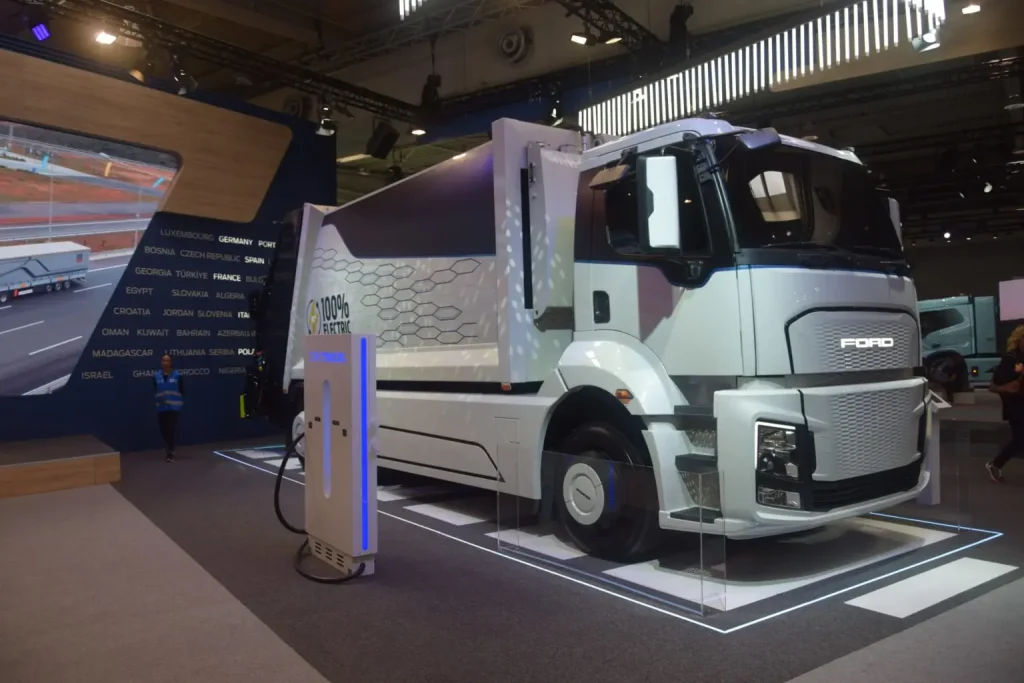
IRIZAR has upgraded its existing 20t BEV rigid N3 truck, featuring innovations aimed at improving energy efficiency, range, and overall system performance. Explore more details about the IRIZAR truck using the sections below.
Other Specs
Energy Use: 1.1 kWh/km
Baseline charger: 50kW DC, 3h
Motor: 230 kW Permanent Magnet
Key Upgrades
HVAC & Thermal Systems: Unified HVAC and battery thermal management system for improved efficiency.
Next-Gen Batteries: GEN3 batteries with higher energy density.
IoT systems: Integration of cloud connected digital twin systems that improve energy efficiency.
Charging Specs
Charging requirements: DC overnight charging
Charging infrastructure: JEMA CCS2 charging (180KW DC)
Charge management: Cloud-based software solution for charge planning and shifts scheduling.
K2 MOBILITY collects data from telemetry providers and on-site chargers to optimise charging plans, considering external constraints and insights like electricity prices or available power capacity. It supervises execution in real time, dynamically adjusting as needed, ensuring vehicle readiness, enhancing operational efficiency in unpredictable conditions and reducing TCO.
Energy Use: 1.1 kWh/km
Baseline charger: 50kW DC, 3h
Motor: 230 kW Permanent Magnet
HVAC & Thermal Systems: Unified HVAC and battery thermal management system for improved efficiency.
Next-Gen Batteries: GEN3 batteries with higher energy density.
IoT systems: Integration of cloud connected digital twin systems that improve energy efficiency.
Charging requirements: DC overnight charging
Charging infrastructure: JEMA CCS2 charging (180KW DC)
Charge management: Cloud-based software solution for charge planning and shifts scheduling.
K2 MOBILITY collects data from telemetry providers and on-site chargers to optimise charging plans, considering external constraints and insights like electricity prices or available power capacity. It supervises execution in real time, dynamically adjusting as needed, ensuring vehicle readiness, enhancing operational efficiency in unpredictable conditions and reducing TCO.
Between FORD Otosan Golcuk and Eskisehir plants. This route includes 10% urban roads and 90% intercity roads. The route length is 198 km.
Between FORD Otosan Golcuk and Eskisehir plants. This route includes 15% urban roads and 85% intercity road. The route length is 230 km.
This route involves travelling from the Ford Otosan Gölcük Factory to the Kartepe Ski Resort and back. This route will be used 20% of the time during the entire demo. The purpose of this route is to collect data on vehicle performance in extreme cold weather conditions and high altitudes. The route itself is 82 kilometres long. To achieve a total distance of 178 kilometres, the route will be completed multiple times throughout the day.
Route #1
Route #1 in Istanbul
Between FORD Otosan Golcuk and Eskisehir plants. This route includes 10% urban roads and 90% intercity roads. The route length is 198 km.
Route #2
Route #2 in Istanbul
Between FORD Otosan Golcuk and Eskisehir plants. This route includes 15% urban roads and 85% intercity road. The route length is 230 km.
Route #3
Route #3 in Istanbul
This route involves travelling from the Ford Otosan Gölcük Factory to the Kartepe Ski Resort and back. This route will be used 20% of the time during the entire demo. The purpose of this route is to collect data on vehicle performance in extreme cold weather conditions and high altitudes. The route itself is 82 kilometres long. To achieve a total distance of 178 kilometres, the route will be completed multiple times throughout the day.